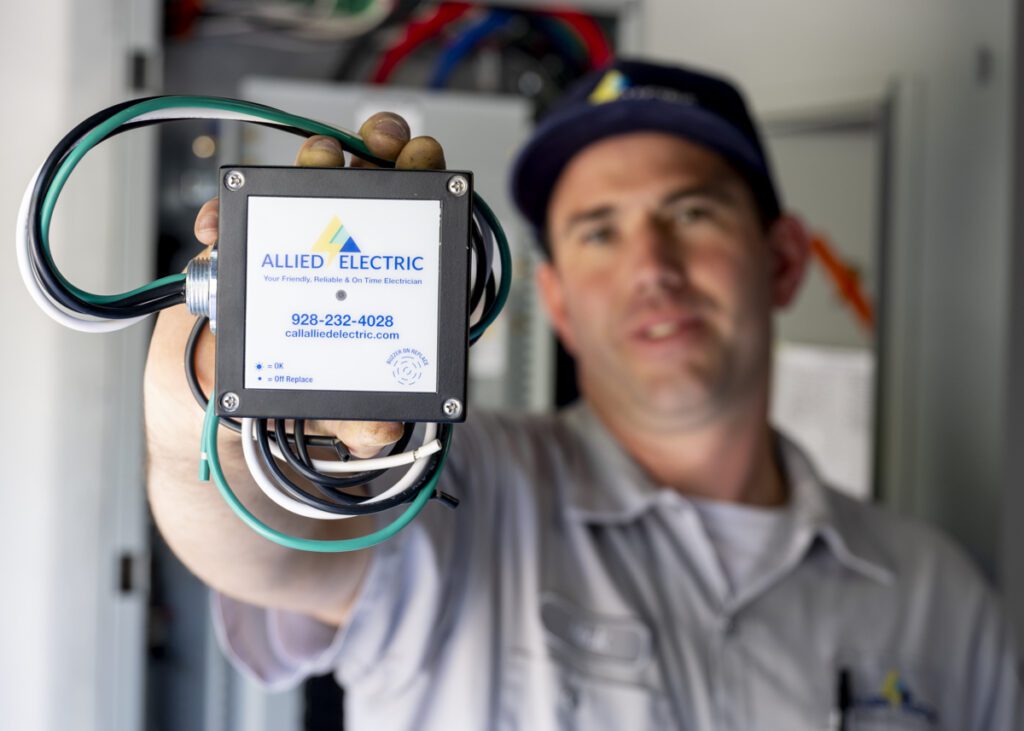
 Reliable Home Surge Protection In Sedona
You know that sinking feeling when the lights flicker during a storm?
Or when you plug in your coffee maker and suddenly your TV stops working? These aren’t just random annoyances. They’re signs your home is experiencing power surges, and they’re costing Sedona homeowners money every single day.
Here’s something most people don’t realize. According to the Electrical Safety Foundation International, a typical home experiences multiple power surges every day. Your refrigerator cycling on, your AC kicking in, or even that hair dryer you just turned on can all trigger small voltage spikes that slowly damage your electronics.
The good news? Whole home surge protection guards every single outlet in your house with one simple installation. It’s like an insurance policy that actually prevents the damage before it happens.
I’m going to walk you through exactly why this matters for your Sedona home and show you how the right protection can save you thousands. Let’s get into it.
Key Takeaways
- According to the National Institute of Standards and Technology, most homes experience dozens of small surges each day, especially in areas with older wiring or frequent power interruptions.
- Whole home surge protectors typically cost between $300 and $900 installed, far less than replacing damaged electronics or appliances.
- Power surges above 170 volts can damage devices, and even small, repeated surges cause “electronic rust” that slowly degrades your equipment.
- Sedona’s monsoon season from mid-June to September brings intense thunderstorms with impressive lightning shows that pose significant surge risks.
- Professional installation by licensed electricians like Allied Electric ensures proper protection through thorough inspection, correct device selection rated for at least 2,000 joules, and regular maintenance.
Importance of Home Surge Protection for Sedona:
Your Sedona home faces unique electrical risks.
Between monsoon season thunderstorms and the demands on the power grid during peak tourist months, voltage fluctuations happen more often than you might think. Surge protection isn’t just a nice-to-have. It’s essential for keeping your valuable electronics and appliances running.
What Are Electrical Surges?
A power surge is a sudden spike in electrical voltage that travels through your home’s wiring. In the U.S., homes operate on a standard 120 volts, but the voltage naturally oscillates between a few volts up to 169 volts. When it passes 170 volts, you’ve got a potentially harmful power surge on your hands.
These spikes can last less than a thousandth of a second, yet they can cause real damage to your electronics and appliances. Even the smallest surges add up over time, slowly wearing down the sensitive circuits inside your devices.
Most surges happen from sources inside or outside your home. Lightning strikes, problems on the utility grid, or large appliances like your refrigerator or air conditioner cycling on and off can all trigger these voltage spikes. According to research, 60 to 80% of power surges actually originate within your own home, making internal protection just as important as guarding against external events.
A whole home surge protection system detects excess voltage the moment it happens and instantly diverts it away from your electrical system, sending it safely into the ground instead of through your expensive TV or computer.
Potential Range of Power Surges
Power surges aren’t all created equal. They range from tiny blips to catastrophic events.
Lightning strikes are rare in Sedona’s high desert, but when they happen during monsoon season, they can send tens of thousands of volts into your home’s wiring in a split second. According to data, over 20 million cloud-to-ground lightning strikes are detected annually across the U.S., and any strike near power lines can create massive surges.
Utility grid fluctuations also create problems. When the power company performs maintenance or when electricity is restored after an outage, these changes often lead to both large and small surges traveling straight to your outlets.
Internal sources are more common but less dramatic. Your refrigerator, air conditioner, or washing machine cycling on and off causes lower-level surges that most people never notice. These small events may only add 5 to 100 volts above the normal threshold, but they happen dozens of times every day.
Surge levels can range from short bursts under 100 volts to extreme events above 10,000 volts during natural disasters or equipment failures. Even aging or faulty wiring in your home can trigger unpredictable voltage spikes that harm sensitive electronics like computers, smart TVs, and gaming consoles.
Common Causes of Electrical Surges
Power surges have surprisingly simple triggers, and many of them happen right inside your own home.
External sources:
- Lightning strikes near your neighborhood can send a massive rush of electricity into home wiring, sometimes from miles away
- Utility grid switching or power restoration after an outage creates sudden voltage spikes
- Transformer issues or downed power lines cause large-scale surges that travel through the electrical grid
Internal sources:
- Air conditioners and refrigerators draw huge amounts of power when their motors cycle on, creating mini-surges
- HVAC systems with variable frequency drives generate small but frequent voltage fluctuations
- Faulty or aging wiring allows electricity to jump where it shouldn’t, especially in older homes
- Overloaded circuits from plugging too many devices into the same outlet
Here’s what many Sedona homeowners don’t know. During monsoon season, which runs from mid-June to the end of September, the area experiences intense thunderstorms with impressive lightning shows. These storms can take the temperature from 105 degrees down to 75 or 80 degrees in minutes, but they also bring flashes of bright white lightning bolts that zigzag repeatedly down to earth.
Each surge, whether from a storm or your washing machine, puts stress on the sensitive devices throughout your home. That’s why reliable surge protection isn’t optional for modern Sedona households.
Signs of Power Surges
How do you know if power surges are quietly damaging your home?
Watch for these warning signs:
Circuit breakers that trip many times a month may signal hidden electrical surges happening behind your walls.
Lights that flicker during storms or when the power fluctuates show your system is experiencing voltage changes. This is especially common during Sedona’s summer monsoons when thunderstorms roll through with little warning.
Check your outlets for burn marks or strange discoloration. These spots can be left behind by small but damaging surges. Even a faint burning smell near an outlet is a red flag that shouldn’t be ignored.
Your digital clocks blinking or showing the wrong time after a brief power interruption also indicates a surge occurred. Devices that mysteriously stop working or show reduced performance may have suffered internal damage from repeated small surges over time.
From my time working with Allied Electric on local installations, these warning signs often go unnoticed until a bigger problem forces the issue. The most vulnerable devices include computers, smart TVs, gaming consoles, routers, and any appliance with a microprocessor. According to industry data, anything containing a microprocessor is especially vulnerable, as even a 10-volt fluctuation can disrupt proper functioning.
Why Choose Home Surge Protection Services by Allied Electric in Sedona?
Allied Electric brings local expertise and professional installation to every Sedona home.
When you’re protecting thousands of dollars in electronics and appliances, you want a team that gets it right the first time.
Professional Expertise
Licensed electricians from Allied Electric start by inspecting your entire electrical setup to spot weak points. They use their experience to choose the best surge protection devices based on what your specific home actually needs, not just what’s on sale.
For most homes, professionals recommend surge protectors with a joule rating of at least 2,000. The joule rating tells you how much energy your surge protector can absorb before it fails. According to Anker, surge protectors rated around 2,000 to 3,000 joules or more are suited for protecting high-end electronics like computers, smart TVs, and gaming consoles.
The typical cost for a whole-house surge protector installation ranges from $300 to $900 in the U.S. This price includes the device itself, professional installation by a licensed electrician, and panel testing to ensure protection is distributed evenly across all circuits.
After installation, the team tests each device for proper function, making sure you get reliable results. They also recommend regular checkups of these systems, as surge protectors can degrade over time. Most quality whole-home surge protectors last anywhere from 3 to 5 years, depending on how many surges they absorb.
With offices in Prescott, Prescott Valley, and Flagstaff, Allied Electric brings local knowledge that fits Sedona’s unique power demands. They understand the challenges of monsoon season and the strain on the electrical grid during peak tourist season when demand spikes.
You can feel confident knowing experts are handling your home’s surge protection with careful planning and proven methods. Many surge protectors also come with warranties that are only valid if the device is installed by a licensed electrician, giving you added peace of mind.
The Real Cost of Not Having Protection
Here’s what most people don’t think about until it’s too late.
According to EnergySage, costs associated with power outages and surges for homeowners can be as high as $25,000 or more if property damage is involved. Replacing damaged electronics can range from a few hundred dollars to thousands, depending on the severity of the surge.
The most at-risk devices in your home are TVs, computers, gaming consoles, refrigerators, HVAC systems, washing machines, and smart home devices including your security system. A single lightning-induced surge can instantly ruin multiple devices.
But here’s the thing many homeowners miss. Your insurance might not cover all surge damage. Some policies exclude power surges entirely, while others only cover a portion of the expenses. Many policies won’t pay for additional living expenses if you can’t live at home due to surge damage, unless there’s actual storm damage involved.
A whole-home surge protector that costs $300 to $900 is a one-time investment that can prevent thousands in replacement costs. When you compare that to replacing a $2,000 computer, a $1,500 refrigerator with a fried control board, or a $3,000 HVAC system, the math is simple.
The investment pays for itself the first time it stops a major surge from destroying your equipment.
F.A.Q.’s – Home Surge Protection in Sedona
1. What is home surge protection and why do Sedona residents need it?
During Sedona’s intense Monsoon Season from June to September, our area sees a high density of lightning strikes that can send dangerous voltage spikes through the grid. Beyond storms, frequent fluctuations from the APS utility grid can silently degrade your sensitive electronics over time, making a dedicated protection system the only way to secure your home’s wiring.
2. How does a whole house surge protector work?
Installed directly at your main breaker panel, this device acts like an electrical pressure relief valve that instantly detects dangerous voltage spikes and redirects the excess energy safely into the ground before it can travel through your walls.
3. What are the benefits of professional surge protection installation in Sedona?
A licensed electrician ensures your system complies with the strict NEC 2020 code requirements, which now mandate surge protection for all new residential services. Professional installation also validates the manufacturer’s connected equipment warranty, which typically covers between $25,000 and $75,000 in damages if the device ever fails.
4. Can surge protectors prevent all electrical damage to my devices?
While a whole-home unit is your first line of defense, no device can stop 100% of the energy from a direct lightning strike to your property. For the best security, experts recommend a “cascading” approach that pairs your main panel protector with high-quality point-of-use strips for sensitive items like your computer and TV.