Is a Damaged Meter Actually a Fire Risk?
I’ve been doing electrical work long enough to know that house fires don’t usually start with some dramatic spark. They start quietly. A little heat. A connection that’s been loose for months. A smell people ignore because “it’ll probably go away on its own.”
And one of the spots people overlook the most? The electric meter. Most homeowners think their meter is just a plastic bubble with spinning numbers. But that box is where your house meets the grid. If it’s cracked, loose, or corroded, you’re dealing with something that can absolutely start a fire.
What Makes a Damaged Meter Dangerous
Here’s the thing—when people say “Damaged Meter,” they usually mean the cover’s cracked or the glass looks cloudy. That’s part of it, yeah. But the real problem isn’t what you see from the sidewalk.
It’s what’s happening inside that socket.
Your meter connects straight to the service conductors feeding your panel. Serious power. If anything in that base loosens up, gets wet, or overheats, you get arcing. And arcing isn’t just noise—it’s heat. Sometimes enough heat to ignite things.
A Damaged Meter might show:
- Cracked housing letting water inside
- Rust around the base
- Loose connections you can’t see
- Burn marks or discoloration on the cover
- Warped plastic from heat buildup
- A meter that physically wiggles when touched
I’ve seen all of these. More times than I’d like.
Can It Really Start a Fire?
Absolutely.
And honestly? It doesn’t even need to be totally broken. A slightly loose connection in a Damaged Meter creates resistance. Resistance creates heat. That heat builds slowly—until one day the dryer kicks on while the AC’s running and suddenly that weak spot becomes the hottest point in your whole system.
I’ve opened meter bases where the lugs looked like they’d been through a fire already. Blackened metal. Melted insulation. That’s not me being dramatic—that’s what happens when connections fail under load.
So yes. A Damaged Meter is absolutely a fire hazard.
The Signs Most People Miss
Here’s the problem, a Damaged Meter doesn’t announce itself. It whispers.
Flickering lights when the HVAC kicks on: Don’t just blame the power company. That could be a loose connection right there in the socket.
Burning smell outside, but only sometimes: I’ve had customers say exactly this. “It smells like hot plastic near the meter, but it comes and goes.” That’s not normal. That’s a warning.
Buzzing or crackling sounds: If you hear that at your meter, you’ve probably got arcing happening. Which means damage is already in progress.
Warm or hot meter cover: Meters shouldn’t feel hot. Ever. If yours does, that’s an emergency.
Rust or water stains: Water getting into a Damaged Meter is setting up a slow failure. Just a matter of time.
Why This Happens More Than You’d Think
Look, meters sit outside in sun, rain, snow, ice—whatever your climate throws at them. They get bumped by lawnmowers. Hit by trash cans. Chewed on by squirrels (yes, actually).
I once did a call where the homeowner had a hairline crack in the meter housing. Thought it was cosmetic. No big deal. Except rainwater had been getting inside for months.
When I pulled that meter, the socket was so corroded it looked like it’d been sitting in a lake. That job could’ve ended very differently if they’d waited another few weeks.
A Damaged Meter doesn’t always come from some big event. Sometimes it’s just time and weather doing their thing.
The Real Fire Risk: Arcing and Heat
When connections loosen, electricity doesn’t flow smoothly anymore—it jumps. That arc creates heat. Enough heat to melt insulation and ignite nearby materials.
And here’s what makes it worse: meter bases are usually mounted right against siding or plywood. So if that heat keeps building, you’re not just cooking the meter. You’re heating the wall behind it. That’s why a Damaged Meter isn’t something you “keep an eye on.” You fix it now.
What to Do If You Think You’ve Got a Problem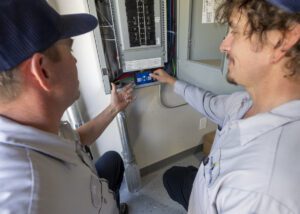
First: don’t pull the meter yourself. I don’t care how handy you are. That seal exists for a reason, and messing with it can get you hurt or worse.
If you suspect a Damaged Meter:
- Inspect visually from a safe distance
- If you smell burning or see smoke, call 911
- Call an electrician or your utility company
- The utility usually has to disconnect power before repairs can happen
Don’t wait. This isn’t a “maybe next week” situation.
Who’s Actually Responsible?
This confuses people. Usually, the utility owns the meter itself. The homeowner owns the socket and everything after it. So if the meter’s cracked, the power company might replace it. But if the base is corroded or burned? That’s typically on you. Either way—don’t waste time arguing about it while the connection keeps failing.
A Story That Sticks With Me
Few years back, I got called for lights “doing weird stuff.” Dimming, brightening, random flickers. Customer thought it was the panel.
I walked around the house and saw it immediately—the meter was crooked. Visibly crooked. When I put my hand near the base and felt heat radiating off it. Not warmth. Heat.
We shut it down, called the utility, and when that meter came out the socket lug was charred black. That connection had been arcing for who knows how long. If they’d waited another month? I think it would’ve lit the siding.
FAQ: Damaged Meter Fire Hazards
Is a cracked meter cover dangerous?
It can be. Cracks let moisture in. Moisture causes corrosion. Corrosion creates heat. That’s the chain reaction that turns a Damaged Meter into a real hazard.
Can a Damaged Meter cause power surges?
Yes. Loose or failing connections cause voltage fluctuations—flickering lights, surges that can damage your appliances.
What does arcing at the meter sound like?
Sometimes a faint buzzing or crackling. If you hear that, don’t ignore it. A Damaged Meter making noise is already failing.
Should I call the utility company or an electrician first?
If the meter itself looks damaged, call the utility. If the base looks burned or loose, call an electrician. Usually both end up involved anyway.
How urgent is it to fix a Damaged Meter?
Very. If you see heat damage, smell burning, or notice flickering tied to load changes—don’t wait. A Damaged Meter can go from “weird behavior” to “actual fire” faster than people realize.
Bottom Line
People worry about overloaded outlets and old wiring. They should. But the meter area? That’s the front door of your electrical system. If that door’s falling apart, everything inside is at risk.
If you suspect a Damaged Meter, don’t brush it off. Don’t hope the smell goes away. Get it checked. Because once heat starts building at that connection, you’re not dealing with an inconvenience anymore. You’re dealing with ignition.
