Signs Your Electrical Panel Is Overloaded?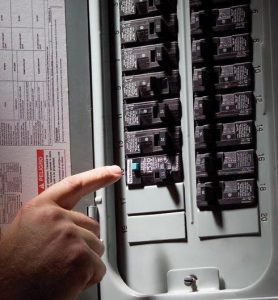
Your lights dim every time the A/C kicks on. A breaker trips for the third time this week. You’re not imagining it, your electrical panel is telling you something. The question is whether you’re listening before it becomes a bigger problem.
Breakers That Keep Tripping
A breaker that trips once is doing its job. A breaker that trips every few days is telling you the circuit is carrying more than it can handle. I’ve seen this constantly in Prescott homes built in the 1970s and ’80s panels that were sized for a much simpler electrical life, long before smart TVs, chest freezers in the garage, and Level 2 EV chargers entered the picture.
Resetting the breaker buys you time. It doesn’t fix anything. If the same one keeps going, that’s a load problem, not a one-off fluke.
Lights That Flicker or Dim on Demand
This one’s easy to spot. You start the microwave, the kitchen lights drop. The dryer kicks on, something in the living room flickers. What you’re seeing is the electrical panel struggling to distribute power across circuits that are all pulling at once.
Mild flickering feels harmless. It isn’t. Consistent voltage fluctuations can shorten the life of electronics and, in worse cases, indicate wiring that’s running hotter than it should. In Prescott’s older neighborhoods especially around the Dells area I’ve walked into houses where the panel was original to the home and hadn’t been touched in 40 years.
Heat, Smell, or Sound Coming From the Panel
Your electrical panel should be quiet and cool to the touch. If it’s warm, that’s worth a call. If it’s hot, that’s a call right now.
A burning smell near the panel plastic, scorched insulation, something chemical means something is overheating. Don’t wait on that one. A homeowner on Willow Creek Road once described it as smelling like a “hot electronics store.” That’s exactly what electrical arcing smells like, and it’s not a smell you ignore.
Buzzing or crackling sounds are the other red flag. Electricity moving through properly sized, well-connected wiring is silent. When you can hear it, something’s wrong.
Your Panel Is Out of Space or Out of Date
If every slot in your electrical panel is occupied and you’re adding a hot tub, a home office circuit, or an EV charger, you don’t just need a new breaker. You likely need a bigger panel. A 100-amp service that made sense in 1988 isn’t built for today’s electrical demands.
Prescott’s building code requires permits for panel upgrades and for good reason. An undersized or improperly installed panel is a fire risk, not just an inconvenience. This isn’t a DIY job, and it’s not a corner to cut.
Call Allied Electric On time. Every time.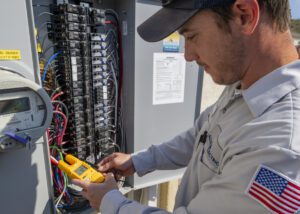
If you’re seeing any of these signs, waiting makes it worse. An overloaded circuit doesn’t fix itself it either trips repeatedly or, eventually, something fails in a way that does real damage. Allied Electric serves Prescott and the surrounding area with licensed electrical inspections and panel upgrades. Don’t let a problem that takes two hours to fix turn into an emergency. On time. Every time.
Call Allied Electric to schedule your electrical panel inspection.
FAQ
My breaker trips every few days can I just reset it and move on?
You can reset it, but that’s not a solution. A breaker that trips repeatedly is responding to a real load problem on that circuit. Resetting it without fixing the underlying cause is like silencing a smoke alarm instead of finding the fire. Get it evaluated before something fails.
How do I know if my electrical panel is actually overloaded or if it’s something else?
Frequent breaker trips, dimming lights when appliances start, and a panel that feels warm are the main signs. That said, some of those symptoms can also come from a failing breaker or a loose connection rather than true overload a licensed electrician can tell the difference quickly, usually within the first hour of an inspection.
Is it safe to add a new circuit if my panel already looks full?
Not without a load evaluation first. A full panel in an older Prescott home may already be running close to its rated capacity. Adding another circuit without checking the math is the kind of thing that looks fine until it isn’t. Arizona requires a permit for new circuits, and there’s a reason for that.
How long does an electrical panel inspection take?
Usually 45 minutes to two hours, depending on the size of the home and how accessible the panel is. If we find issues, we’ll walk you through what we found before recommending anything.
Does an overloaded panel always need to be replaced?
Not always. Sometimes the fix is redistributing loads across circuits, or moving a high-draw appliance to its own dedicated line. But if you’ve got a 100-amp panel in a house that’s asking for 150 or 200 amps of capacity, upgrading is the right call not a workaround.
If you’ve been putting this off, today’s a good day to stop doing that.
